
Recycled Polyester (rPET) Fabric Supplier | GRS rPET
Recycled Polyester (rPET) Fabric Supplier
susmaterials is a B2B recycled polyester fabric supplier providing rPET fabrics for apparel, bags, footwear and accessories brands. We supply woven and knitted recycled polyester (rPET) in a broad range of weights and finishes, with GRS chain-of-custody available on request, flexible minimums and fast sampling. Request swatches or our Selection Guide to begin.
Recycled Polyester at a Glance
| Material family | Recycled synthetic fibre (rPET) |
|---|---|
| Typical hand-feel | Familiar polyester hand; wide range of weights |
| Best suited to | Apparel, linings, bags, performance textiles |
| Less suited to | Projects requiring fully natural-fibre content |
| Composition note | Recycled PET; recycled-content level stated per grade |
| Certifications | GRS / recycled-content documentation on request |
This summary is qualitative and indicative; exact specifications, grades and documentation are confirmed per project during sampling.
A qualitative buyer guide, not a substitute for sampling. Request swatches to confirm colour, hand-feel and finish for your own product. These notes are our own qualitative opinion. They are not a rating or a certification, and they have not been verified by any third party.
What Is Recycled Polyester (rPET)?
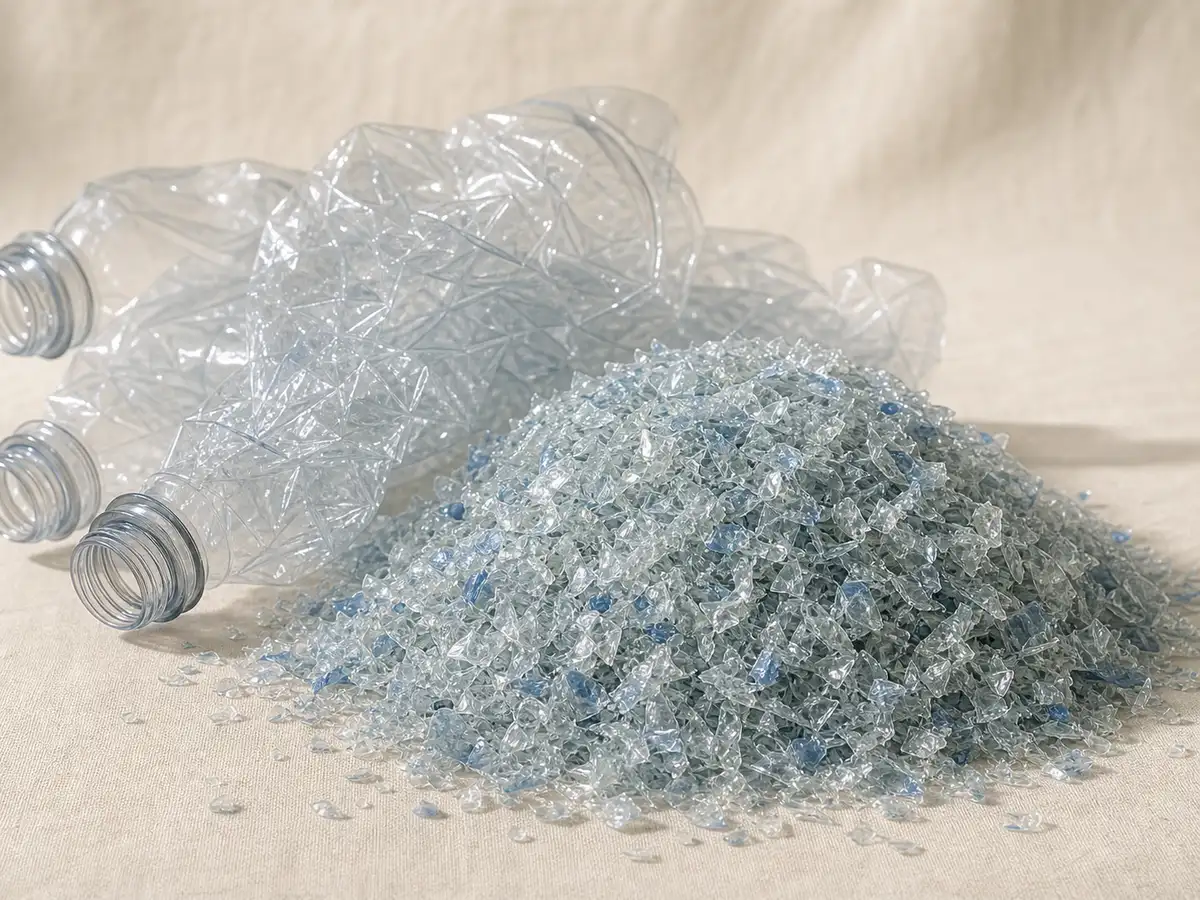
Recycled polyester, or rPET, is polyester fibre made from reclaimed PET — most commonly post-consumer plastic bottles. It delivers the performance characteristics brands already rely on from polyester, while replacing virgin fossil-based feedstock with recycled input. For many product categories, switching to recycled polyester fabric is one of the most straightforward lower-impact material moves a sourcing team can make, because it slots into existing specifications.
How Is rPET Fabric Made?
Collected PET bottles and other PET waste are sorted, cleaned and processed into flakes, then melted and extruded into chips and spun into yarn. The yarn is woven or knitted into fabric, then dyed and finished like conventional polyester. Because the fibre chemistry matches virgin polyester, recycled PET fabric can typically be substituted into existing product lines with minimal re-engineering.
Why Brands Choose Recycled Polyester
- Lower-impact feedstock: recycled input replaces virgin fossil-based raw material[1].
- Drop-in substitution: matches the performance profile of conventional polyester in most specs.
- Traceability systems: we work within the Global Recycled Standard (GRS), with chain-of-custody documentation available on request[2].
- Range depth: wide selection of weights, weaves, knits and finishes for different end uses.
Best For · Not Recommended For
Best for
- Activewear, outerwear and linings
- Bags, backpacks and luggage shells
- Footwear textiles and trims
- Home textiles and brand merchandise
Not recommended for
- Programmes positioned around natural-fibre or plastic-free claims
- Applications where microfibre shedding is a stated concern for the brand without a mitigation plan
- High-heat industrial uses beyond standard polyester ratings
Hand-Feel & Performance
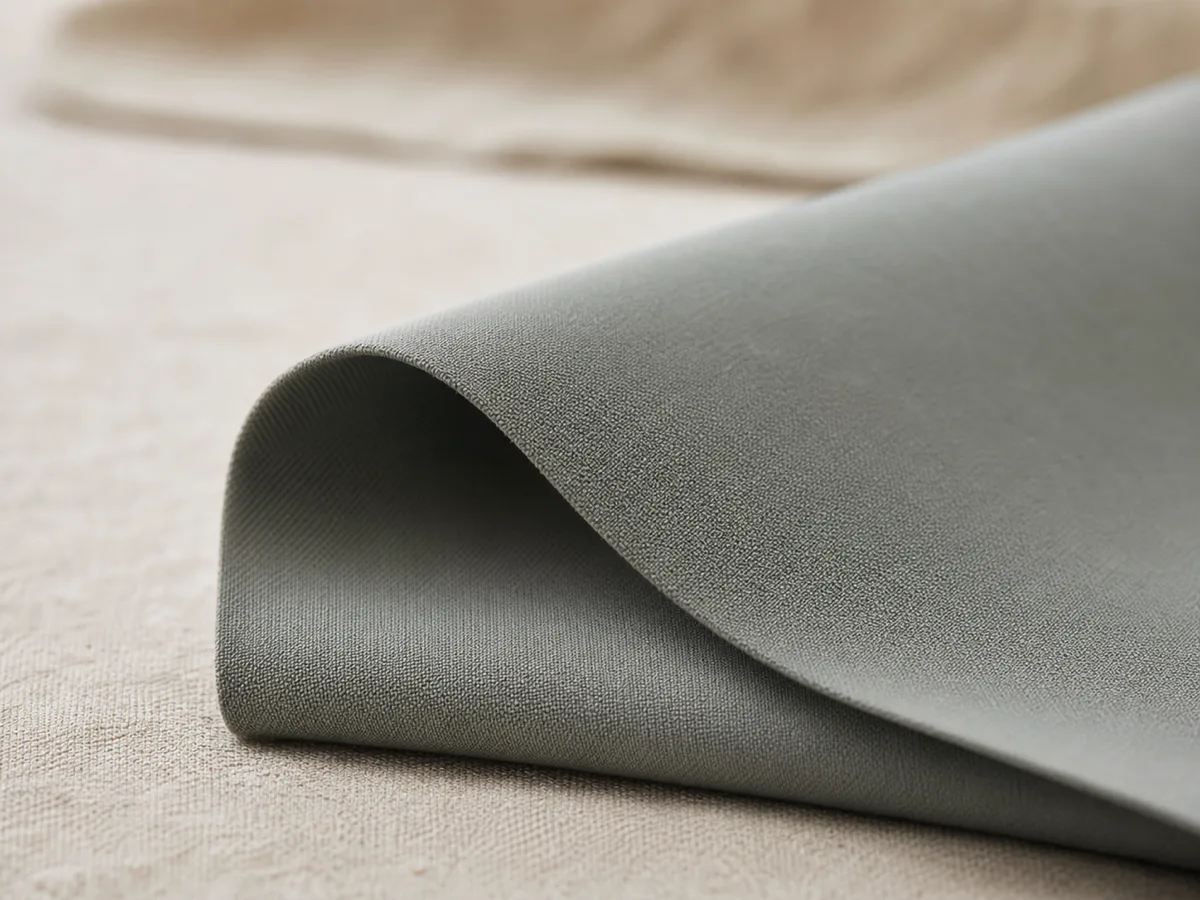
rPET fabrics span crisp, technical wovens to soft brushed knits, with performance comparable to equivalent virgin polyester in strength, colourfastness and dimensional stability. Water-repellent and other functional finishes are available across much of the range. Performance is grade-specific, so we match fabric to application. Full test data is available on request.
Sustainability Profile
Recycled polyester diverts post-consumer and post-industrial PET — most familiarly used bottles and polyester waste — back into fibre, reducing reliance on virgin petroleum feedstock. That bottle-to-fabric diversion is its core environmental case. Honestly, it remains a synthetic fibre and, like all polyesters, can shed microfibres in laundering, so it is a lower-impact choice rather than an impact-free one. We are transparent about recycled-content levels and chain-of-custody, and supply GRS documentation on request so your team can verify claims rather than take them on trust.
GRS & Recycled-Content Certification
We work within the Global Recycled Standard (GRS) and related recycled-content verification systems. Chain-of-custody and recycled-content documentation for the specific fabrics you shortlist is available on request as part of your sourcing process — see our certifications overview for how this works.
Sampling & Minimums
We keep minimums flexible and sampling fast, supporting everything from capsule collections to ongoing production programmes. Tell us your end use, target weight and finish requirements, and we will send relevant headers and swatches. We typically reply quickly.
We do not just resell whatever is cheapest. Before a material reaches your sampling table it passes a four-step check, so the swatch you hold is one we would put our own name behind.
Certification documents are shared on request and confirmed per project — they are never published publicly.
What We Can Supply rPET Fabric For
We supply recycled polyester fabrics for apparel, bags, backpacks, footwear, accessories, linings and home textiles, including support with weight selection, functional finishes and colour development against your standards.
Frequently Asked Questions
Is recycled polyester as durable as virgin polyester?
In equivalent constructions, rPET performs comparably to virgin polyester for typical apparel and bag applications. Full test data for specific fabrics is available on request.
Can you provide GRS documentation?
We work within the GRS system and chain-of-custody documentation is available on request for shortlisted fabrics. See our sourcing FAQ for more on certification and lead times.
Is your rPET bottle-based or textile-to-textile recycled?
Most recycled polyester we supply is bottle-to-fabric (post-consumer PET). Textile-to-textile recycled polyester is an emerging stream we can explore for specific programmes; tell us your recycled-content target and we will advise what is realistic for your fabric and timeline.
Where does the recycled content come from?
Primarily post-consumer PET, such as beverage bottles, processed through verified recycling streams. Content details for each fabric are confirmed during sourcing.
Can rPET be dyed and finished like normal polyester?
Yes. It accepts the same dyeing and finishing processes, including water-repellent and brushed finishes.
Request a swatch or a tailored quote
Tell us your product, target hand-feel and colour direction and we will send relevant Recycled Polyester swatches and a tailored quotation for your project. Fast sampling, flexible minimums and certification documents on request.
No obligation — we typically reply within one business day.
Discover More Materials
- Organic Cotton — natural fibre fabrics within the GOTS system
- Cactus Leather — plant-based leather alternative for accessories
- Apple Leather — fruit-based vegan leather alternative
- Browse the full eco textiles collection
Start Sourcing Recycled Polyester
Request swatches of recycled polyester (rPET) with your end use and target weight, or request our Selection Guide by email to map the full range first. We typically reply quickly.