
Sustainable Materials Supplier | Vegan Leather & Textiles
A B2B catalogue of sustainable materials, organised by use — plant-based and recycled vegan leather alternatives, eco textiles and next-generation bio-innovations — each chosen for consistent quality, workable hand-feel and a credible lower-impact story.
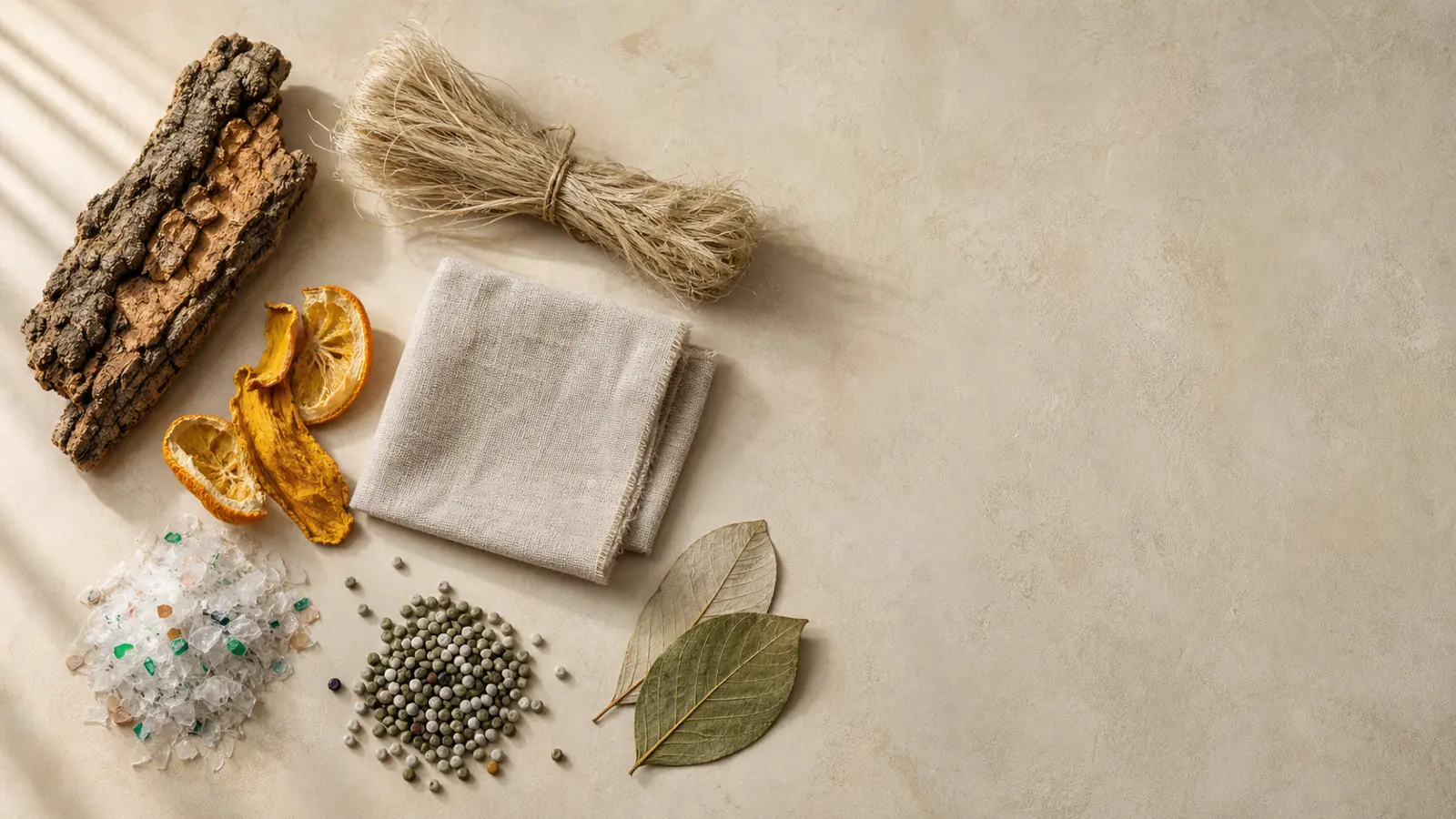
Leather Alternatives
Vegan leather alternatives — plant-based, bio-based and reclaimed-content materials for bags, footwear, small leather goods and upholstery, including pineapple-leaf, cactus and mycelium options (we are not affiliated with Piñatex®).
 Cactus LeatherSoft, durable nopal-cactus leather alternative for bags and accessories.
 Apple LeatherBio-based leather made with apple-industry by-products.
 Pineapple Leaf LeatherLightweight non-woven leather from pineapple-leaf fibre.
 Cork LeatherRenewable cork-bark material with a natural grain.
 Bamboo LeatherSmooth leather made with rapidly renewable bamboo content.
 Hemp LeatherTough, natural-looking leather made with hemp fibre.
 Coconut LeatherLeather built on coconut-water by-products and husk fibre.
 Mushroom LeatherNext-generation leather grown from mushroom mycelium.
 Washable Kraft PaperSewable, machine-washable cellulose sheet for totes, pouches and brand labels.
 Grape LeatherLeather made from winemaking grape-marc residues.
 Mango LeatherLeather made from discarded mangoes.
 Coffee LeatherLeather made with spent coffee grounds.
 Orange LeatherLeather made from orange-juice production residues.
 Lemon LeatherBright citrus-waste leather from lemon-juice residues.
 Barley LeatherLeather made with spent barley from brewing and malting.
 Corn LeatherCoated leather made with corn-derived bio-polyol.
 Recycled LeatherBonded material from reclaimed leather fibre.
 Recycled PU LeatherCoated material made with recycled-content polyurethane.
 Recycled PVB LeatherSheet material reclaimed from laminated-glass interlayer.
 Silicone LeatherDurable, solvent-free synthetic for high-contact goods.
Eco Textiles
Vegan and natural fibres plus recycled fabrics for apparel, lining, lifestyle and home — from organic cotton and linen to TENCEL™ Lyocell and recycled polyester (we are not affiliated with TENCEL™).
 Organic CottonOrganically grown cotton for apparel and lifestyle.
 LinenCrisp, durable flax fabric for apparel and home textiles.
 Hemp FabricDurable, breathable industrial-hemp textile.
 JuteAffordable, biodegradable bast fibre for bags and decor.
 SisalStrong agave-leaf fibre for rugs, decor and footwear.
 Banana FiberStrong natural fibre from banana-plant stems.
 Pineapple FiberLightweight woven fibre from pineapple leaves.
 LyocellClosed-loop wood-pulp cellulosic with smooth drape.
 Bamboo FiberSoft, breathable cellulosic from renewable bamboo.
 Corn Fiber (PLA)Bio-based fibre made from corn sugars; industrially compostable.
 Recycled Polyester (rPET)Recycled-content polyester for apparel and packaging.
 Recycled NylonRegenerated nylon from reclaimed waste.
 Recycled CottonFabric made from reclaimed cotton fibres.
 Textile-to-TextileFabric recycled from end-of-life textiles.
 Ocean-Bound PlasticPolyester from plastic intercepted before the ocean.
Bio-Innovations
Next-generation and experimental materials — mycelium leather, algae and seaweed fibre, biopolymers marketed as biodegradable and reclaimed-glass materials — with honest guidance on what is production-ready today. New to these? Start with our sourcing FAQ.
- Mushroom (Mycelium) LeatherNext-generation leather grown from mycelium.
 Algae / Seaweed FiberEmerging bio-material from fast-growing algae.
 PHA BiopolymerMarine-biodegradable biopolymer for hardware and films.
 Lavender LeatherExperimental leather from lavender-distillation residues.
 Hop / Beer LeatherExperimental leather from brewing by-products.
 Recycled PVB FilmThin film from reclaimed windshield-interlayer PVB.
 Recycled Glass AggregateDecorative material from recycled crushed glass.
Sourcing Through a Vetted Materials Partner vs Spot-Buying
Sustainable materials are only as credible as the sourcing behind them. Here is how working with a vetted materials partner compares with buying from unvetted or one-off suppliers.
| Vetted materials partner (susmaterials) | Spot-buying / unvetted sourcing | |
|---|---|---|
| Material vetting | Materials are pre-screened against composition, performance and documentation criteria before we recommend them. | You vet each unknown source yourself, often without a clear basis for comparison. |
| Certification documentation | Relevant certification and verification documents are shared with qualified buyers on request. | Paperwork can be inconsistent, missing or hard to authenticate. |
| Lower-impact credibility | We are candid about what each material is — and is not — so your sustainability claims hold up to scrutiny. | Overstated or vague green claims create greenwashing and compliance risk. |
| Sampling & development | Swatch kits and sample yardage with hands-on guidance on hand-feel, finish and construction fit. | Limited or no structured sampling before you commit to a run. |
| Sourcing consistency | A single accountable partner across multiple material families and projects. | Fragmented relationships and variable quality from order to order. |
| Honest fit advice | We will tell you early when a material is wrong for your product, not after production. | Sellers are incentivised to close the sale regardless of fit. |
This comparison is qualitative; specifics, grades and documentation are confirmed per project during sampling.
Tell us what you are making and we will match you with the right sustainable material, send a quote and a colour card, and guide you from sampling to bulk supply.