
Jute Fabric
Jute Supplier for B2B Brands
susmaterials is a B2B jute supplier serving fashion, accessories and footwear brands. We supply jute in a range of finishes and specifications, with flexible minimums, fast sampling and certification documentation available on request. Request swatches or our Selection Guide to start a sourcing conversation.
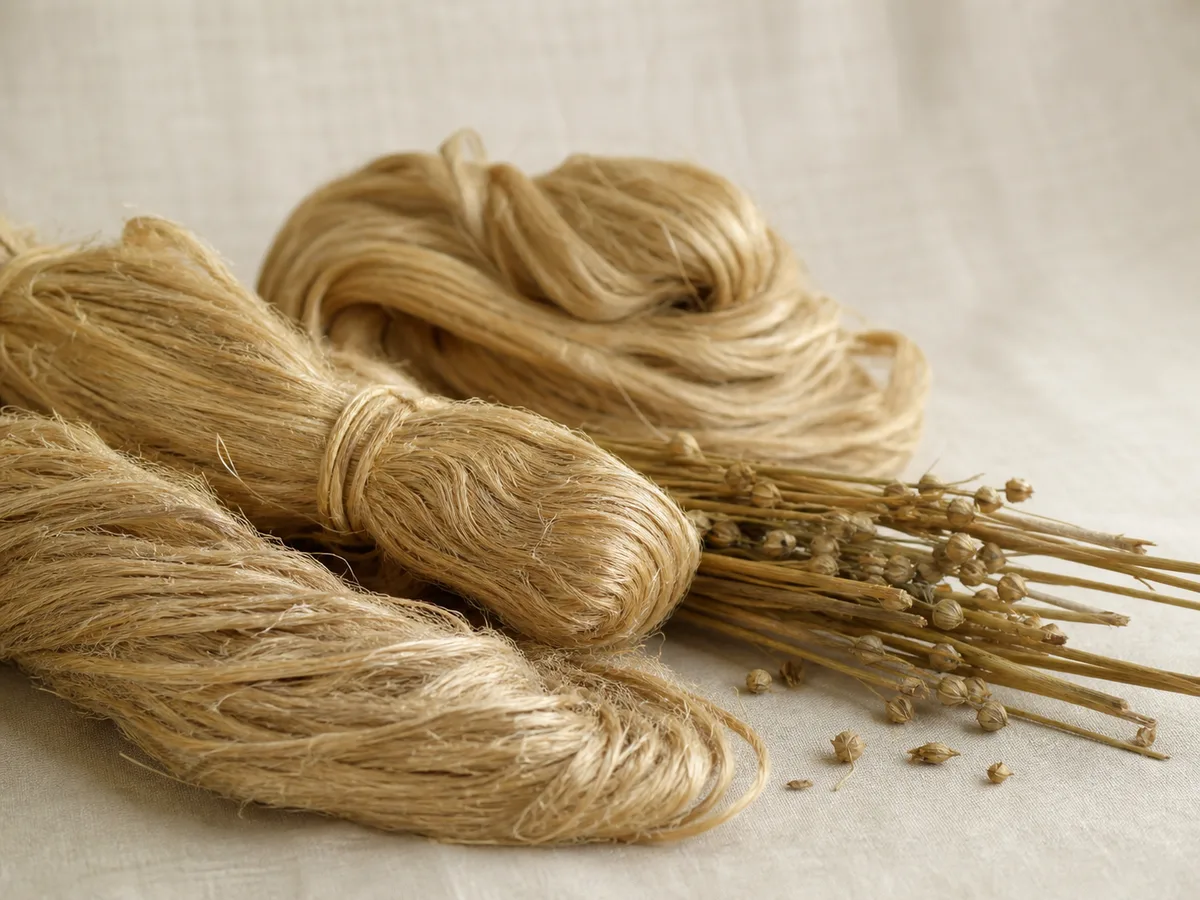

Jute Fabric at a Glance
| Material family | Natural bast fibre textile (jute plant) |
|---|---|
| Typical hand-feel | Coarse, strong, with a rustic natural texture |
| Best suited to | Bags, packaging, homeware, interiors, structured goods |
| Less suited to | Next-to-skin apparel, high-flex fine garments |
| Composition note | Jute bast fibre, spun and woven |
| Certifications | Biobased-content & traceability systems on request |
This summary is qualitative and indicative; exact specifications, grades and documentation are confirmed per project during sampling.
A qualitative buyer guide, not a substitute for sampling. Request swatches to confirm colour, hand-feel and finish for your own product. These notes are our own qualitative opinion. They are not a rating or a certification, and they have not been verified by any third party.
What Is Jute?
Jute fabric is a natural textile woven from the bast fibre of the jute plant, a fast-growing annual that needs little fertiliser or irrigation and is plant-derived. Often called the golden fibre, jute is strong, breathable and biodegradable, which makes it a long-standing lower-impact choice for bags, packaging and interiors. For a deeper introduction, read our material guides.
How Is Jute Made?
Harvested jute stalks are retted in water to loosen the bast fibre, which is then stripped, washed and dried. The fibre is spun into coarse yarn and woven into fabric, finished for the intended use. Because jute grows quickly with minimal inputs and is plant-derived throughout, it remains a staple natural fibre.
Why Brands Choose Jute
- Low-input, fast-growing crop: grows quickly with minimal fertiliser or pesticide.
- Biodegradable: undyed and uncoated, it breaks down in soil or composting conditions; dyes, coatings and synthetic blends slow or prevent this.
- Strong & affordable: good strength at low cost.
- Rustic natural look: an earthy aesthetic for bags and home goods.
Best For · Not Recommended For
Best for
- Tote bags, sacks and packaging
- Home textiles, rugs and decor
- Footwear components such as espadrille soles
- Reinforcement and craft applications
Not recommended for
- Soft next-to-skin apparel
- High-abrasion or wet-strength-critical uses
- Products needing a fine, smooth hand
We would rather tell you early that a material is wrong for your product than have you discover it in production. Share your use case via our contact page and we will advise honestly.
Hand-Feel & Performance
Jute has a coarse, earthy hand with a rustic look that suits bags, packaging and home decor. It is strong but stiff and rough next to skin. Certification is improving across the supply base but not universal; we advise on availability per grade.
Certifications Available
We work within recognised certification and verification systems relevant to jute, including OEKO-TEX / REACH conformity available on some grades (not universal across the supply base). Documentation for specific grades is available on request as part of a sourcing conversation.
Sampling & Minimums
We keep sampling fast and minimums flexible, so emerging brands and established labels can both develop with us. Tell us your product type, target hand-feel and direction, and we will dispatch relevant swatches. We typically reply quickly to all sampling enquiries.
We do not just resell whatever is cheapest. Before a material reaches your sampling table it passes a four-step check, so the swatch you hold is one we would put our own name behind.
Certification documents are shared on request and confirmed per project — they are never published publicly.
What We Can Supply Jute For
We supply jute for bags, packaging, home textiles, footwear components and craft. We can also support development with colour matching, specification selection and application guidance based on your construction method and product standard.
Frequently Asked Questions
Is jute biodegradable?
Jute is a bast fibre grown as a fast-rotating annual crop. Undyed, uncoated jute is cellulosic and breaks down in soil or composting conditions; dyes, coatings and synthetic blends slow or prevent this. Processing and finishing still matter; we detail this per grade.
Is jute certified?
Certification (OEKO-TEX / REACH) is available on some grades but is not yet universal across the jute supply base. We advise on what is available for a given grade.
Is jute strong?
Yes — it has good tensile strength, which is why it is widely used for sacks, bags and packaging.
Request a swatch or a tailored quote
Tell us your product, target hand-feel and colour direction and we will send relevant Jute Fabric swatches and a tailored quotation for your project. Fast sampling, flexible minimums and certification documents on request.
No obligation — we typically reply within one business day.
Discover More Materials
- Sisal — a stiff natural leaf fibre
- Hemp Fabric — a durable bast-fibre fabric
- Banana Fiber — a strong plant bast fibre
- Browse the full eco textiles collection
Start Sourcing Jute
Request swatches of jute and tell us about your product, or request our Selection Guide by email to compare jute against other options before you sample. We typically reply quickly.